







A love hotel rents a room two ways: kyūkei (休憩), a rest of a few hours, or shukuhaku (宿泊), an overnight stay. That split is the whole format. Everything else — the themed rooms, the picture-panel lobby, the fact that you may never see a member of staff — follows from designing a hotel around short stays and privacy rather than around travellers with luggage.
The reason the format exists at all is housing. Urban Japanese apartments are small, walls are thin, and living with family well into adulthood is ordinary. A love hotel sells the one thing that is genuinely scarce, by the hour.
Two laws, and why the buildings look the way they do
Love hotels sit under two separate Japanese regimes at once, which explains a lot of their design.
The first is the Ryokan Business Act (旅館業法), which governs lodging businesses generally — defined as the business of lodging people for a fee, with "lodging" meaning use of the premises with bedding. Under its public-morals provisions, a lodging business may not fit out its premises with mirrors, bedding or fixtures likely to arouse sexual curiosity, and may not display on the outside of the building advertising that shows rest rates or similar. That last rule is why the prices are on a panel inside the lobby rather than on a board at the street: the discretion is a legal requirement as much as a courtesy.
The second is the Fūeihō, the act regulating businesses affecting public morals. It defines a category of "love hotel etc. business" which operates on a notification basis, and it brings location restrictions — there are zones where such a business may not be sited at all — plus a set of prohibited practices.
The Act also defines a distinct motel business (モーテル営業): a lodging facility where individual rooms each connect to their own car garage, used by guests arriving as a couple for a stay or a rest. If you have wondered why some roadside establishments have a curtained garage per room, that is a legal category, not a quirk.
The gap in the definition
Here is the part that rarely appears in visitor guides. Because the Fūeihō regulates a defined category, establishments that do not meet that definition — referred to in Japanese policy documents as ruiji rabu hoteru (類似ラブホテル), love-hotel lookalikes — fall outside the location restrictions and prohibitions that apply to the real thing, while operating in much the same way.
This was not an obscure concern. The National Police Agency took it up through its public-morals administration study group, and in May 2010 published a regulatory assessment on widening the scope of what counts as a love hotel business. The practical upshot for a visitor is small but worth knowing: two places that look identical from the street may not be under the same rules.
How you actually check in
- The lobby has a panel of photographs of the rooms. Lit means available; unlit means taken. You choose by pressing the picture.
- Rates are shown per room for a rest and for an overnight stay, and the two differ substantially. Overnight availability usually only begins later in the evening.
- Payment is normally at a machine, sometimes at a shuttered window where you never see a face. The design goal is no conversation.
- Rooms are stocked as standard — toiletries, robes, hairdryer, often more. You are not expected to bring anything.
- Checking out is leaving. Billing is automated, and the room locks behind you.
- No Japanese is required for any of this. Some panels have an English toggle; the pictures work regardless.
What we list in Japan
Very little, and it is better to say so than to imply otherwise. We hold 22 Japanese listings, clustered in Tokyo and Sapporo, and exactly one of them is a love hotel. Our love-hotel category as a whole runs to 27 venues and is mostly European — the by-the-hour room is not a Japanese invention so much as a Japanese perfection of it, and Germany, Spain and the Benelux have plenty. There is nothing listed for Osaka.
The love hotel we list in Tokyo
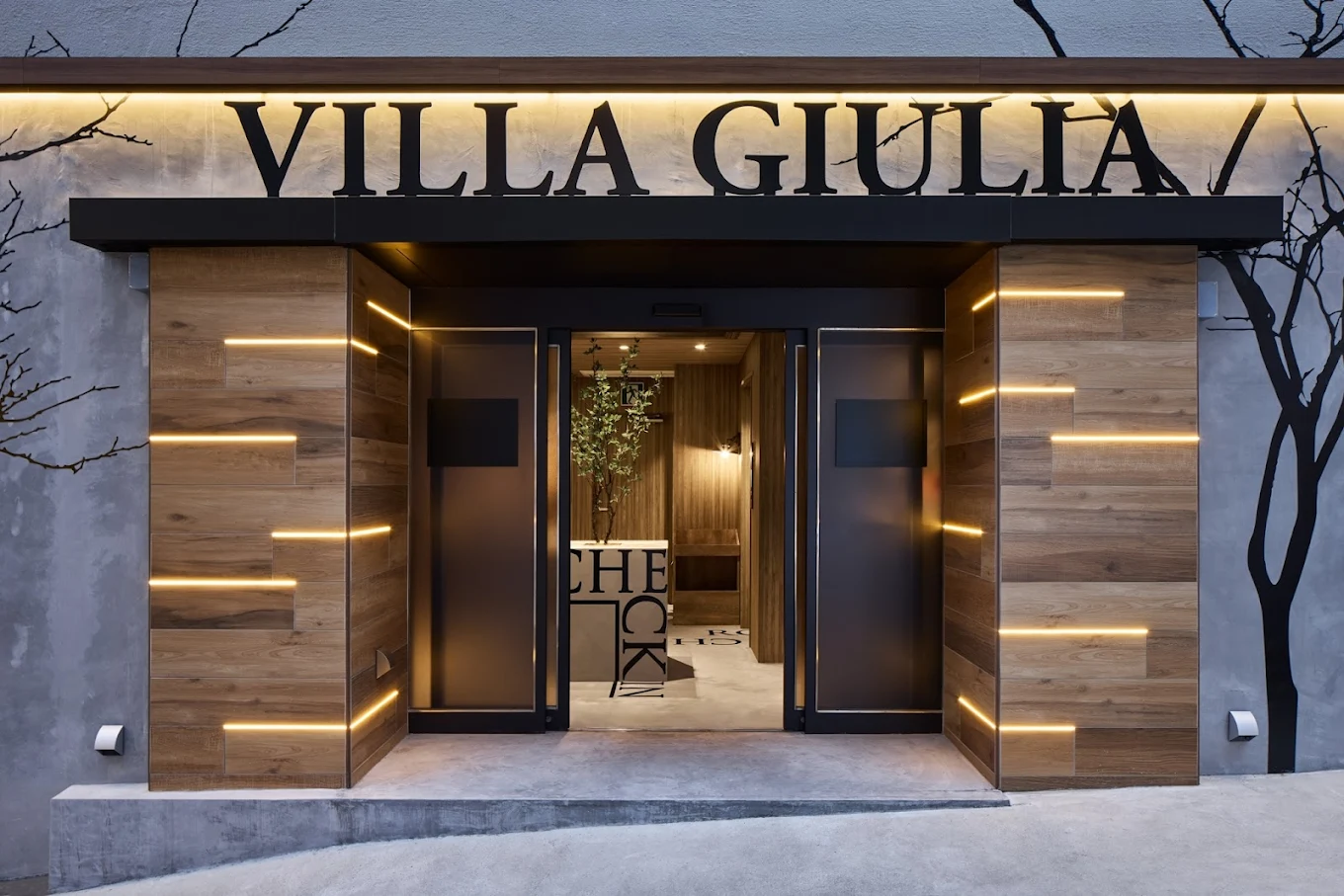
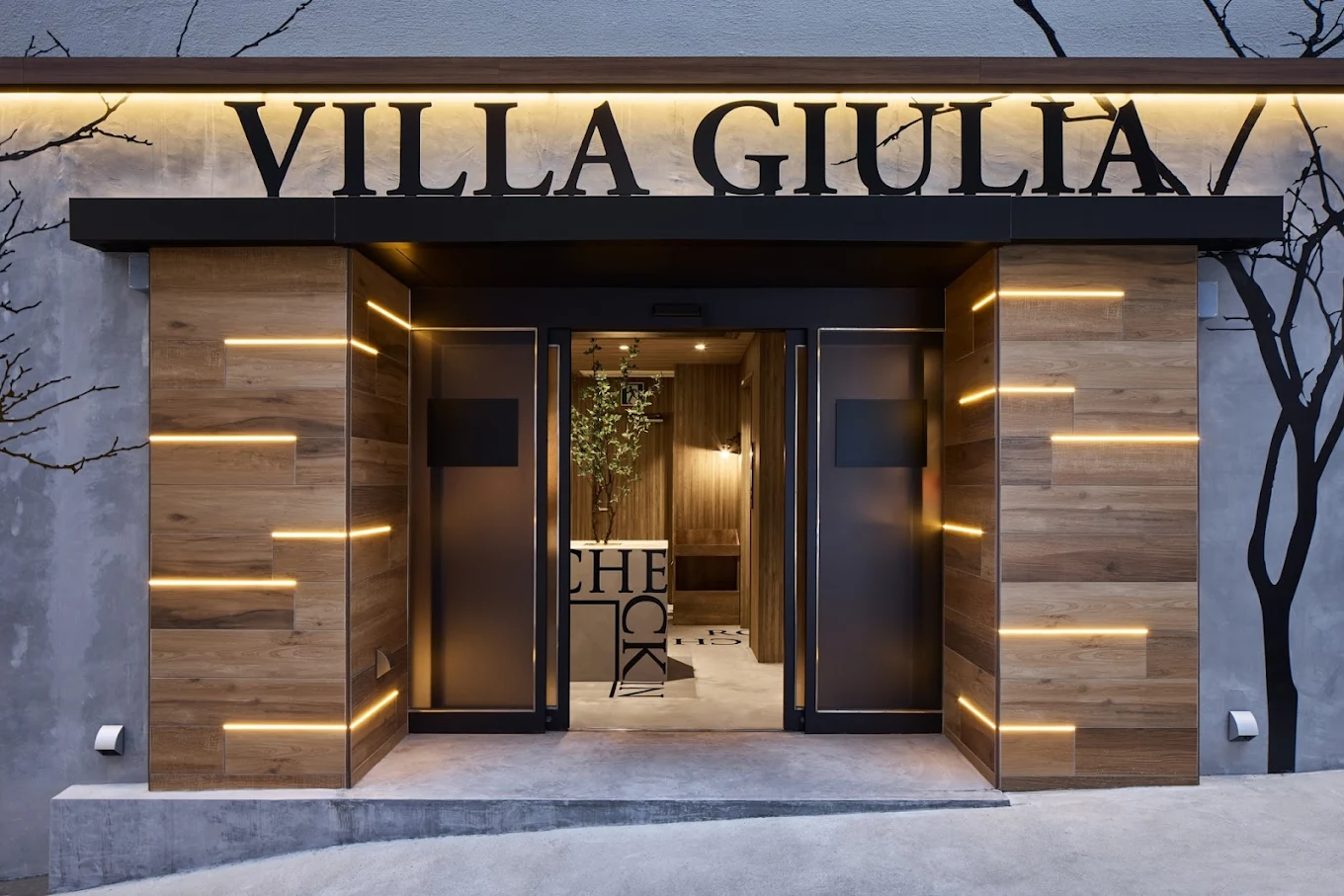
Hotel Villa Julia
Tokyo · Japan
Tokyo's Hotel Villa Julia exemplifies the classic Japanese love hotel experience with themed rooms, rotating selection panels, and discreet check-in s...
The same by-the-hour format turns up worldwide under different names and with far less styling — we cover that in our guide to short-time hotels. Rules for adult venues differ by country; our legal status hub sets out the position per destination.
Frequently asked questions
Can foreigners use a love hotel?
Yes, and the check-in process is the easiest part. You pick a room from a photo panel and pay at a machine, so no Japanese is needed and often no interaction with staff at all.
What is the difference between a rest and a stay?
A rest (休憩) is a block of a few hours, priced well below an overnight stay (宿泊). Overnight rates usually only become available from later in the evening, because the room earns more from rests during the day. Both are posted on the lobby panel.
Why are the prices never displayed outside?
Because a lodging business in Japan is not permitted to display advertising on the outside of the building showing rest rates or similar. The panel inside the lobby is where the rates live, and that is a rule rather than a style choice.
Are love hotels only for sex work?
No — they are ordinary infrastructure used by couples who have no privacy at home, which is a widespread situation in urban Japan. They are also the practical venue for paid encounters, since conventional hotels generally do not admit unregistered guests.
Is a love hotel the same as a motel in Japan?
Not quite. "Motel business" is its own legal category under the Ryokan Business Act: a facility where each room connects to its own car garage, used by couples for a stay or a rest. It is a love hotel with parking designed for arriving unseen.
Are they all regulated the same way?
No, and this is the one genuine subtlety. Only premises meeting the statutory definition of a love hotel business fall under the Fūeihō's siting restrictions and prohibitions. Establishments that fall outside it — the lookalikes — operate similarly with less regulation, which is why the police agency has looked at widening the definition.